Why Fast Structural Drying Matters After Houston Floods
Flooding in Houston can happen fast. Heavy spring storms roll in, bayous fill up, and water has nowhere to go. Streets turn into streams, and that water can push right into homes and businesses. Carpets soak, walls get wet, and contents are quickly at risk.
Getting visible water out is only the first step. What many people do not see is the moisture that soaks into drywall, subfloors, wall studs, and hidden cavities. That trapped moisture does not just dry on its own. It can lead to mold, bad smells, and weak spots in the structure.
This is where structural drying services in Houston come in. Structural drying is the bridge between emergency water removal and full repair of your property. It is the focused process that pulls moisture out of the bones of the building so it can be safely cleaned and rebuilt. We will walk through what structural drying is, why Houston's climate makes it tricky, and how a trained team manages the process step by step.
Understanding Structural Drying in Houston's Climate
Structural drying is a science-based process that draws moisture out of building materials, not just the air. It targets things like:
- Drywall and plaster
- Wood framing and trim
- Subfloors and floor coverings
- Ceiling materials and insulation
- Hidden wall and floor cavities
Instead of just opening windows and putting up a fan, proper structural drying uses controlled equipment, air movement, and dehumidification. It is planned, measured, and adjusted over time until the structure reaches a safe, dry level.
Houston's climate makes this work harder. We have:
- High humidity that slows natural evaporation
- Warm temperatures that encourage mold growth
- Frequent spring and early summer storms that keep things damp
If you just "air things out" in that kind of environment, you might dry some surfaces, but deep moisture can stay trapped. That is why a basic box fan and waiting a few days is not enough after a flood.
Construction style matters too. In the Houston area, we see a lot of:
- Slab-on-grade homes where moisture can wick up from flooring
- Pier and beam homes with crawl spaces that hold damp air
- Townhomes and condos with shared walls and tight spaces
- Office and commercial buildings with complex mechanical systems
Each type needs a different drying plan. Wall thickness, insulation type, floor system, and access points all affect how the structure is dried and how long it takes.
Step-by-Step Breakdown of Professional Structural Drying
Structural drying starts long before the dehumidifiers turn on. A trained team follows a clear series of steps to make sure nothing is missed.
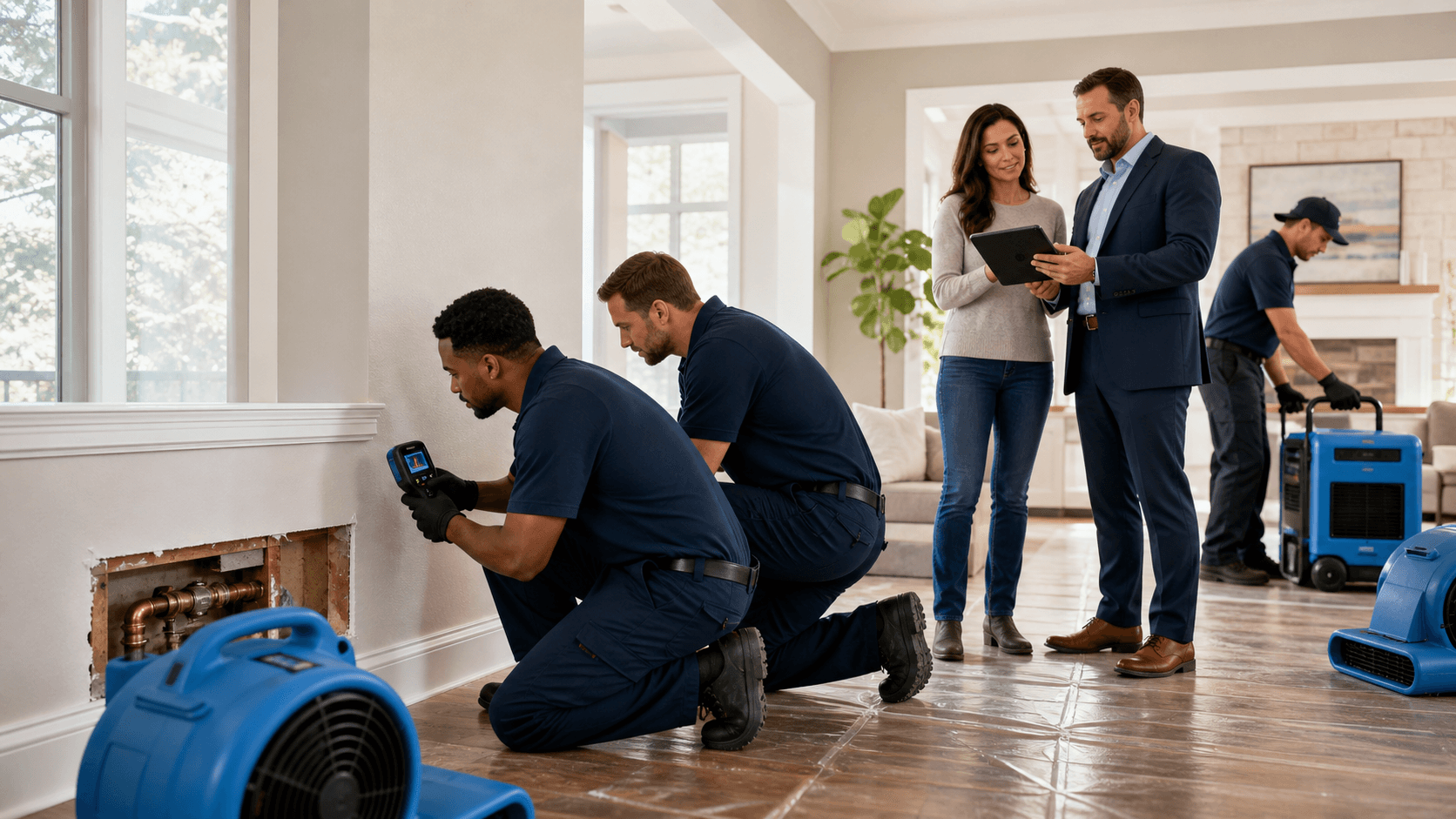
First is inspection and moisture mapping. Technicians use tools like:
- Moisture meters to check how far water has moved
- Thermal imaging cameras to find hidden wet spots
- Visual inspection behind baseboards, around cabinets, and in closets
This shows how wide the damage is and which materials are affected, not just what is visibly wet.
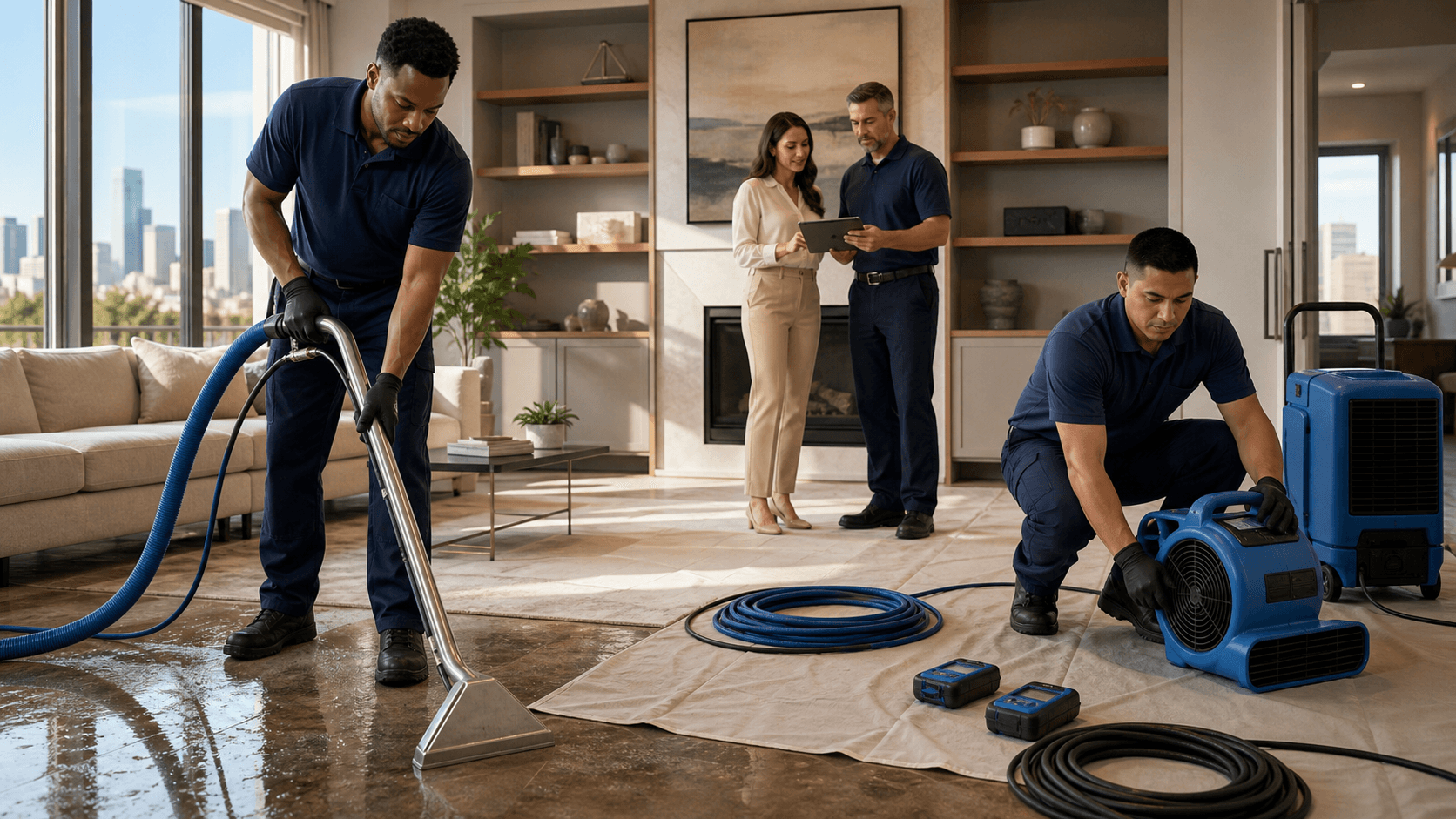
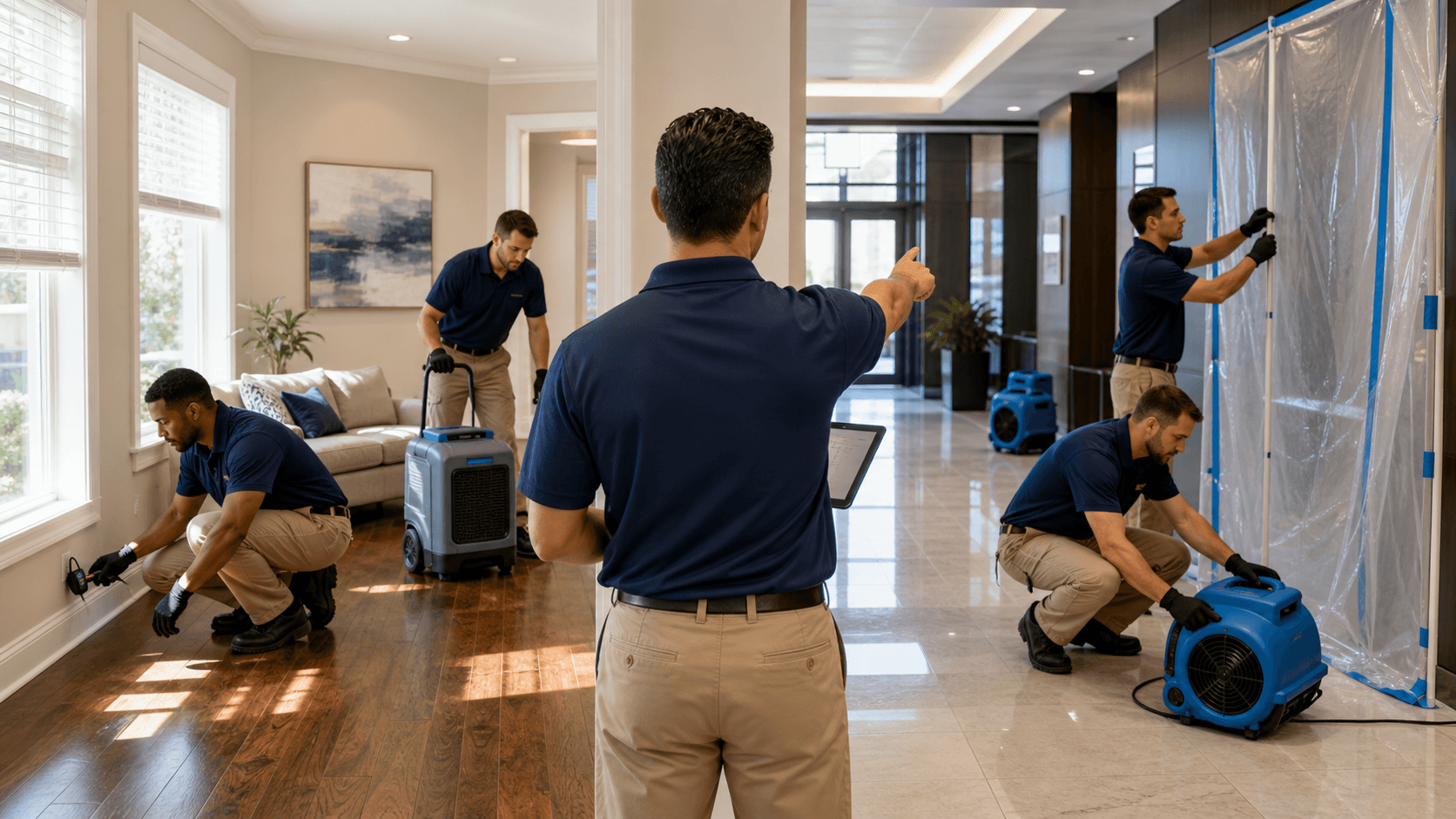
Next comes water extraction and stabilizing the environment. Powerful pumps, extractors, and wet vacs remove standing water from floors and carpets. Once the liquid water is gone, the team sets up dehumidifiers and high-velocity air movers. These work together to control humidity and temperature so moisture can move from the structure into the air and then into the dehumidifiers.
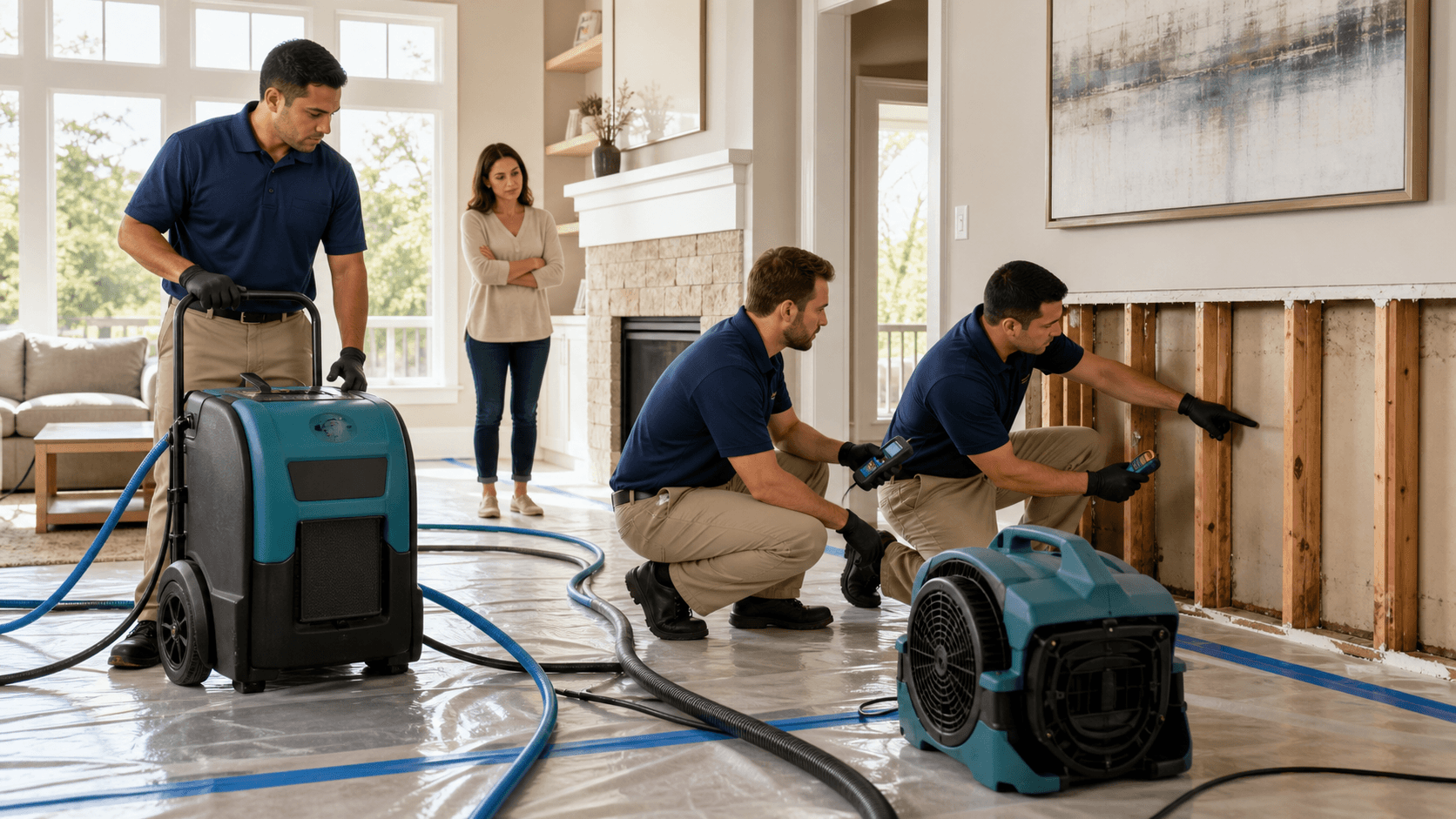
Focused drying of structural components comes after that. Depending on the situation, technicians may:
- Remove baseboards to release moisture trapped at the bottom of walls
- Drill small holes in drywall for directed wall cavity drying
- Float carpets or remove pads to dry subfloors
- Evaluate hardwood, laminate, and tile to see what can be saved
Every step is aimed at drying the structure without tearing out more than needed.
Ongoing monitoring and documentation are a big part of the process. Each day, the team checks:
- Moisture levels in key materials
- Temperature and relative humidity in the space
- Equipment placement and performance
They keep written or digital records that show the drying progress. These records help support insurance claims and prove that the property was dried correctly, which is important for long-term peace of mind.
How Structural Drying Protects Your Home or Business
Water left inside materials is not just a comfort issue, it is a health and safety concern. In warm, humid air like we have in Houston, moisture that sits for even a short time can help mold grow. That can lead to musty odors and can affect indoor air quality for everyone in the building.
Structural drying protects your property by:
- Reducing the chance of mold colonizing walls and ceilings
- Limiting unpleasant and lingering smells
- Helping keep the air cleaner and more comfortable indoors
It also guards the structure itself. When moisture stays trapped, you can see:
- Warped or swollen wood framing
- Weak or crumbling drywall
- Subfloors that separate or split
- Damaged insulation that no longer works well
- Electrical issues where wiring or boxes got wet
By drying the structure correctly, more materials can often be saved instead of torn out. That usually means faster repairs and less mess. For businesses, this can also reduce downtime, so operations can get back on track sooner.
Good documentation from a professional drying process is helpful for insurance claims and for future buyers or tenants. Being able to show that water damage was handled by trained technicians gives confidence that the building was treated the right way, not just quickly patched.
Choosing the Right Structural Drying Team in Houston
When floodwater gets inside, not every cleanup service is the same. Choosing the right team for structural drying services in Houston makes a big difference in the outcome.
Here are key things to look for:
- IICRC-certified technicians who follow industry standards
- Specific experience with both homes and commercial buildings
- A track record handling Houston-area flood events
The equipment used on your job matters too. A professional drying team should have tools such as:
- Low-grain refrigerant dehumidifiers for tough humidity
- High-velocity air movers to speed up evaporation
- Negative-pressure systems for wall and cavity drying
- HEPA filtration to help protect indoor air during the process
- Thermal cameras and modern moisture meters
Response time is another big factor. Flooding does not wait for business hours, and neither should the drying process. A strong team offers:
- 24/7 emergency response
- Rapid arrival when storms hit during busy seasons
- The ability to add more equipment and crews when whole neighborhoods are flooded
Local knowledge helps as well. A Houston-based company understands area building codes, common construction styles, and typical flood patterns around bayous, creeks, and low-lying streets. They can also coordinate directly with insurers that handle Houston-area claims and know what documentation is usually required.
Take Action Fast When Houston Floodwaters Rise
When floodwater starts creeping toward your property, every hour counts. The clock on structural damage and mold growth starts as soon as materials get wet. Waiting to see if things will dry on their own often leads to more tear-out, more repairs, and more time away from your home or business.
A simple checklist for property owners includes:
- Do not walk through standing water if there are electrical risks
- Turn off utilities only if it is safe and you have been instructed to do so
- Move valuables, electronics, and important papers to a dry area if you can do it safely
- Keep children and pets away from affected areas
- Contact a professional structural drying company as soon as possible
As we move through late spring and toward the height of hurricane season, it is smart to be ready. Know who you would call before the next big rain event. Houston Water Damage Restoration provides 24/7, IICRC-certified help with water, flood, mold, sewage, and fire damage across the Houston area, and structural drying is a key part of that work. Having a trusted team in mind ahead of time can make a stressful flood feel a lot more manageable.
Get Started With Your Project Today
If water has compromised your walls, floors, or ceilings, we are ready to act quickly to protect your property and prevent long-term structural problems. At Houston Water Damage Restoration, our specialists use proven techniques and professional equipment to dry your building safely and thoroughly. Schedule our structural drying services in Houston today so we can inspect the damage, create a targeted plan, and begin restoring your space to pre-loss condition.