Same Day Water Cleanup That Protects Your Houston Property
Water on your floors, walls, or ceilings is not just a mess; it is an emergency. In a short time, clean water can soak into drywall, wood, and cabinets, turning a small problem into a big repair project that upsets your whole week.
Same-day water damage cleanup in Houston is about fast action. It means a trained team shows up quickly, stops the source when possible, removes standing water, and starts drying and protecting your home or business in those first important hours. Waiting, even until "after work," can lead to higher damage and more things that cannot be saved.
We work with homes and businesses across the Greater Houston area, and our IICRC-certified technicians follow insurance-approved processes that fit local building styles and our humid Gulf climate. Here is what usually happens from the moment you make that first call until your property is stable and on its way back to normal.
The Critical First Hour After Water Damage
The first hour after water damage is where a lot of the outcome is decided. Water can quickly run under walls and into insulation, soak subfloors, cabinets, and baseboards, and start warping wood and bubbling paint. In warm, damp spaces, those wet materials can also feed early mold growth.
When you call, the dispatcher will ask clear questions so we can send the right crew and equipment. You can expect to be asked about:
- Where the water is coming from, if you know
- How long it has been leaking or standing
- What kind of property it is, home or commercial
- How large the affected area is
- Any power shutoffs, strong odors, or safety concerns
While you wait for the team, there are a few simple steps you may be able to take, if it is safe:
- Shut off the main water supply if a pipe or appliance is leaking
- Turn off affected breakers if water is near outlets or wiring
- Move small valuables and electronics away from wet areas
- Stay out of rooms with sagging ceilings or dirty water
Across the Greater Houston area, heavy rain and spring storms can cause many calls in a short time. We plan for this by staging crews and trucks so help can reach different parts of the city and suburbs as quickly as possible.
On-Site Assessment and Protecting Your Belongings
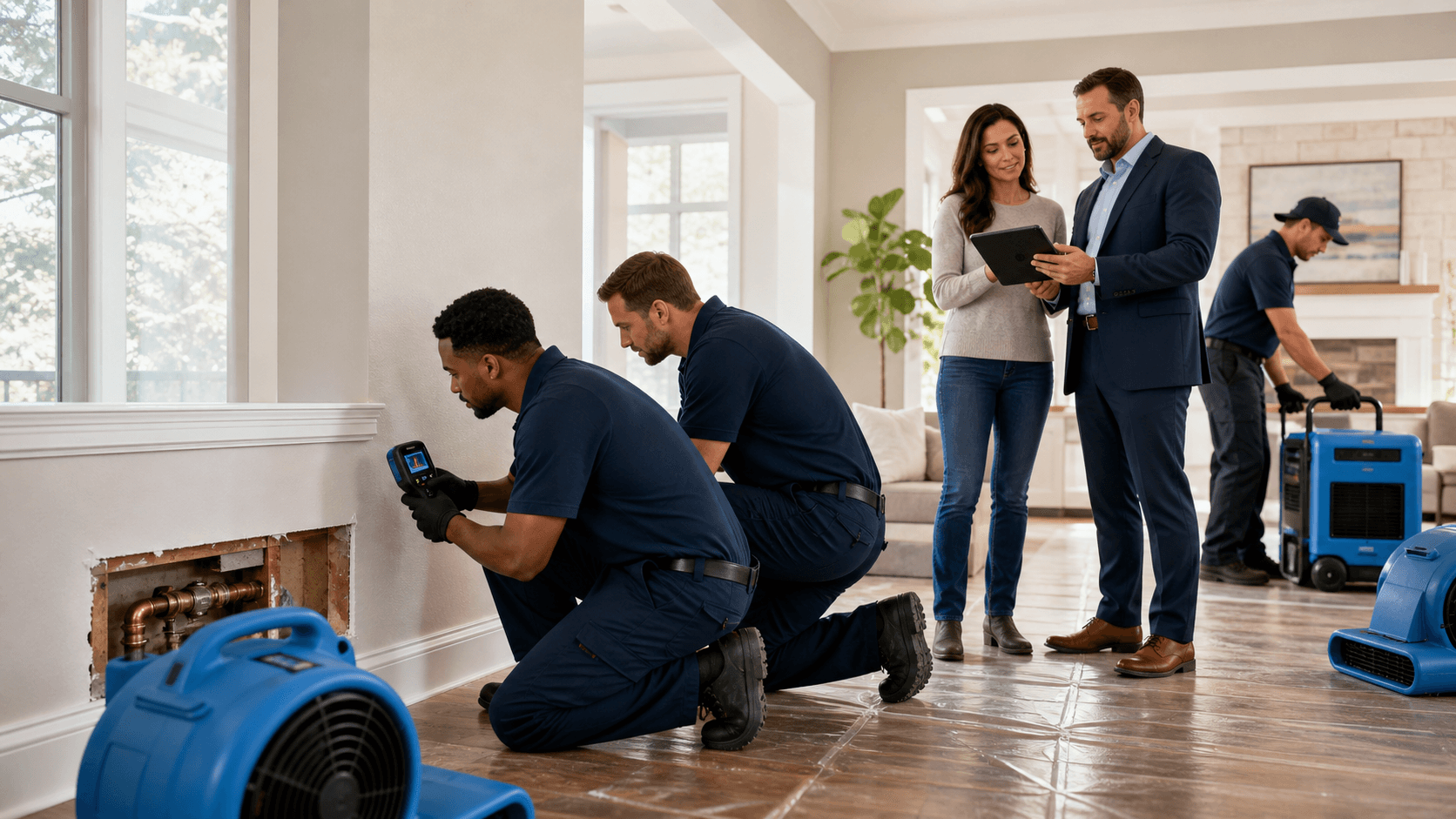
Once the crew arrives, the first step is a fast but careful inspection. We look for the source of the water and whether it is still active, confirm the water category (clean, gray, or black), and measure how far moisture has spread using meters and infrared tools. We also watch for signs of danger such as ceiling sag, loose flooring, or electrical risk.
At the same time, we protect your belongings. That often includes:
- Moving furniture, rugs, and boxes out of wet areas
- Lifting items onto blocks so moisture does not wick up
- Covering items with plastic sheeting to shield from drips or dust
- Separating items that are already damaged from those we can likely save
Then we explain a same-day action plan in plain language. We walk through which rooms and materials are affected, what can likely be dried in place and what may need removal, how long drying might take, and how we will fight mold in our high-humidity Houston air.
From the start, we document what we see. Our team takes photos and videos of:
- Affected rooms and surfaces
- Contents with clear water lines or staining
- Any structural changes or surface conditions, like buckling or staining
These records help support a smoother insurance claim and show how conditions change as the work moves forward.
Fast Water Extraction and Moisture Removal
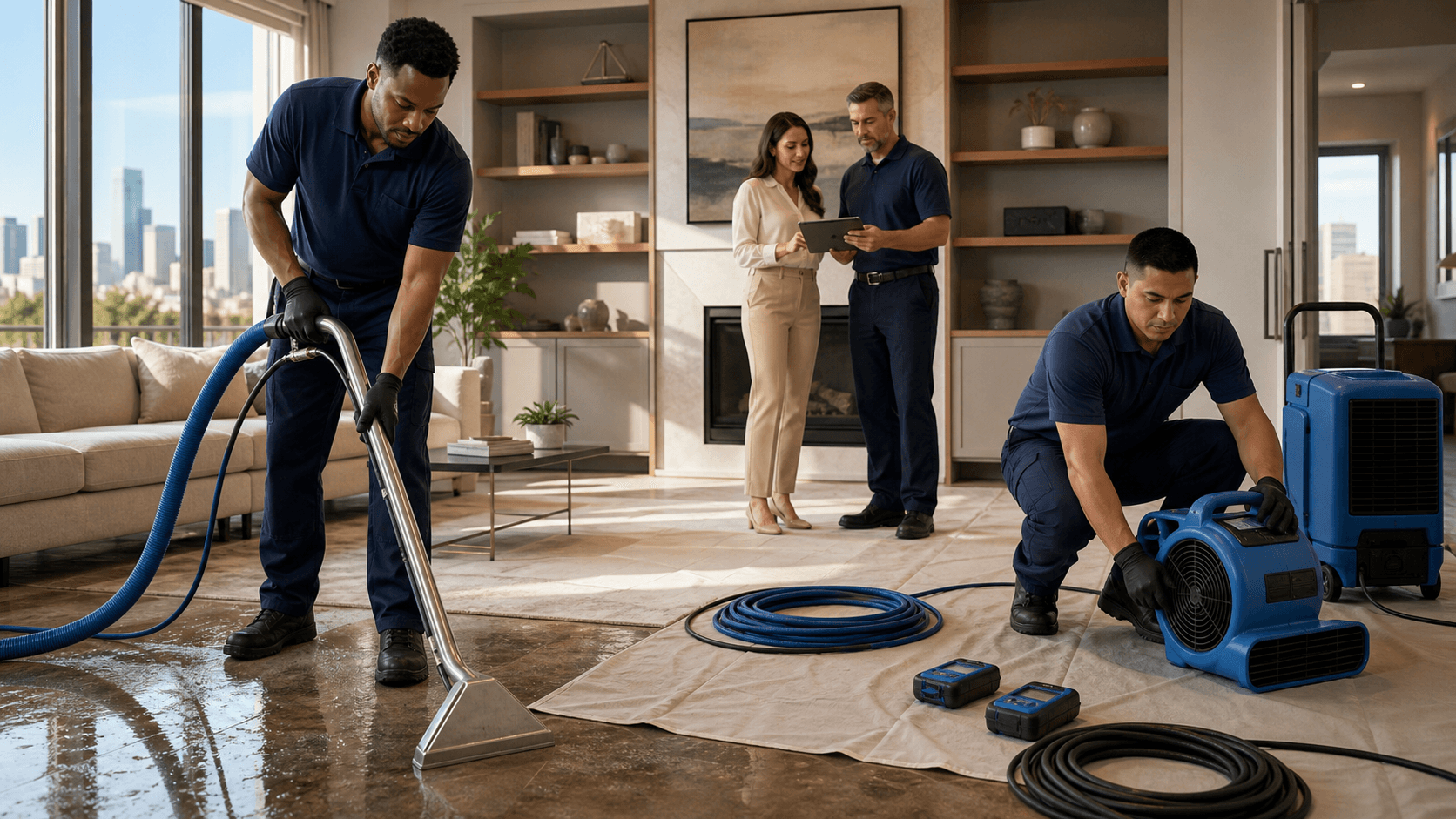
Once the plan is clear and safety checks are done, we move straight into water extraction. Same-day water removal is one of the strongest tools we have to limit long-term damage. We use:
- Truck-mounted or portable extractors for floors and carpets
- Submersible pumps in areas with several inches of standing water
- Special carpet and pad tools to pull water from soft layers
- Floor wands and squeegees for tile, concrete, and other hard surfaces
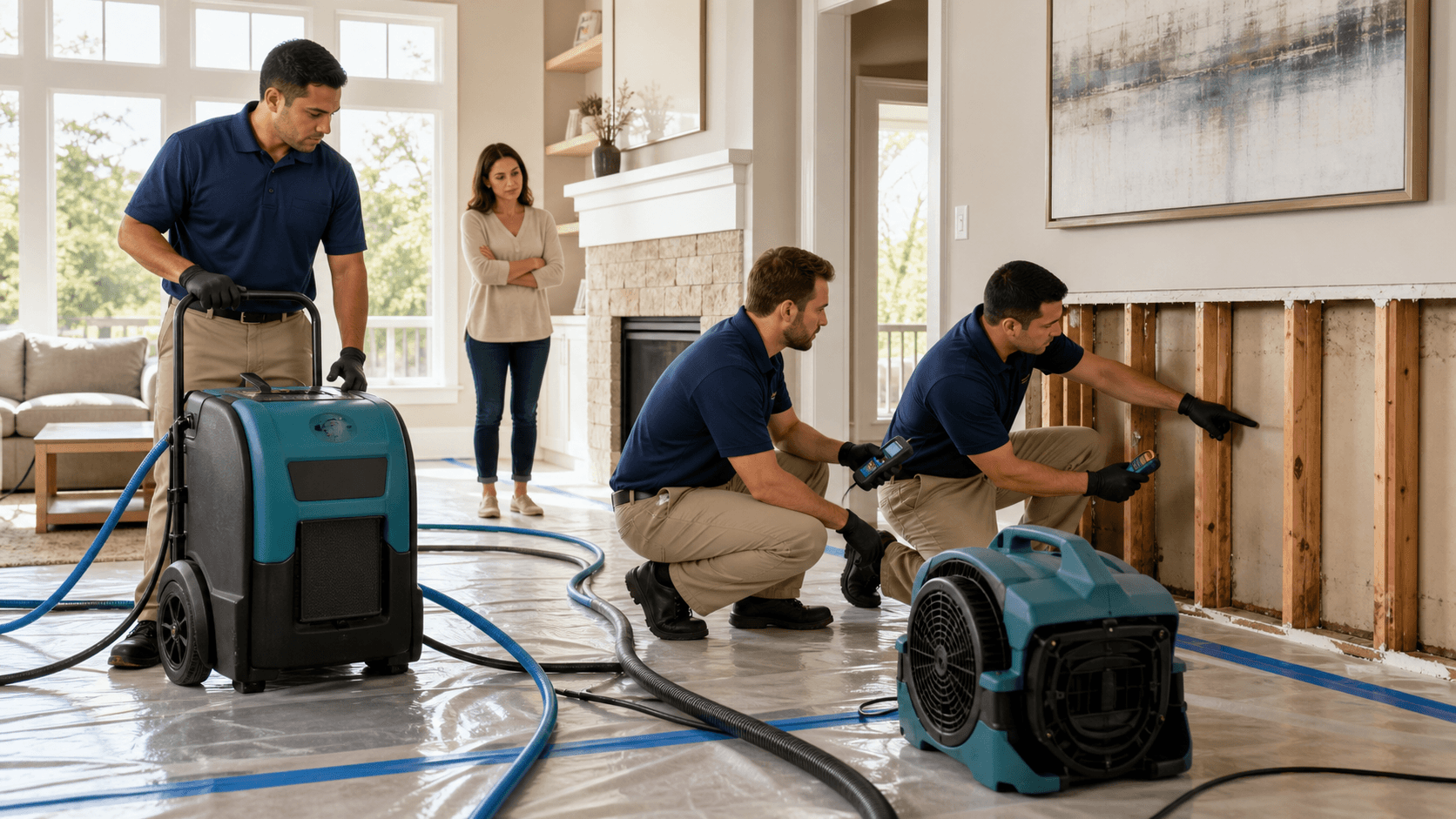
Different properties in Houston need different methods. Slab foundations, for example, often hide water at wall edges and behind baseboards, while pier-and-beam homes may hold water in crawl spaces. Hardwood can cup or buckle if water sits too long, and commercial properties with glue-down carpet tiles respond differently than homes with thick padding.
Fast removal helps avoid problems like:
- Buckling or cracked floors
- Stained, drooping ceilings
- Peeling paint and loose drywall
- Strong, musty odors as materials stay wet
We also treat different water categories with different care. Clean water from a supply line break is handled differently than gray water from a washing machine or black water from a sewer backup or outdoor flooding. In contaminated water situations, the affected areas may need:
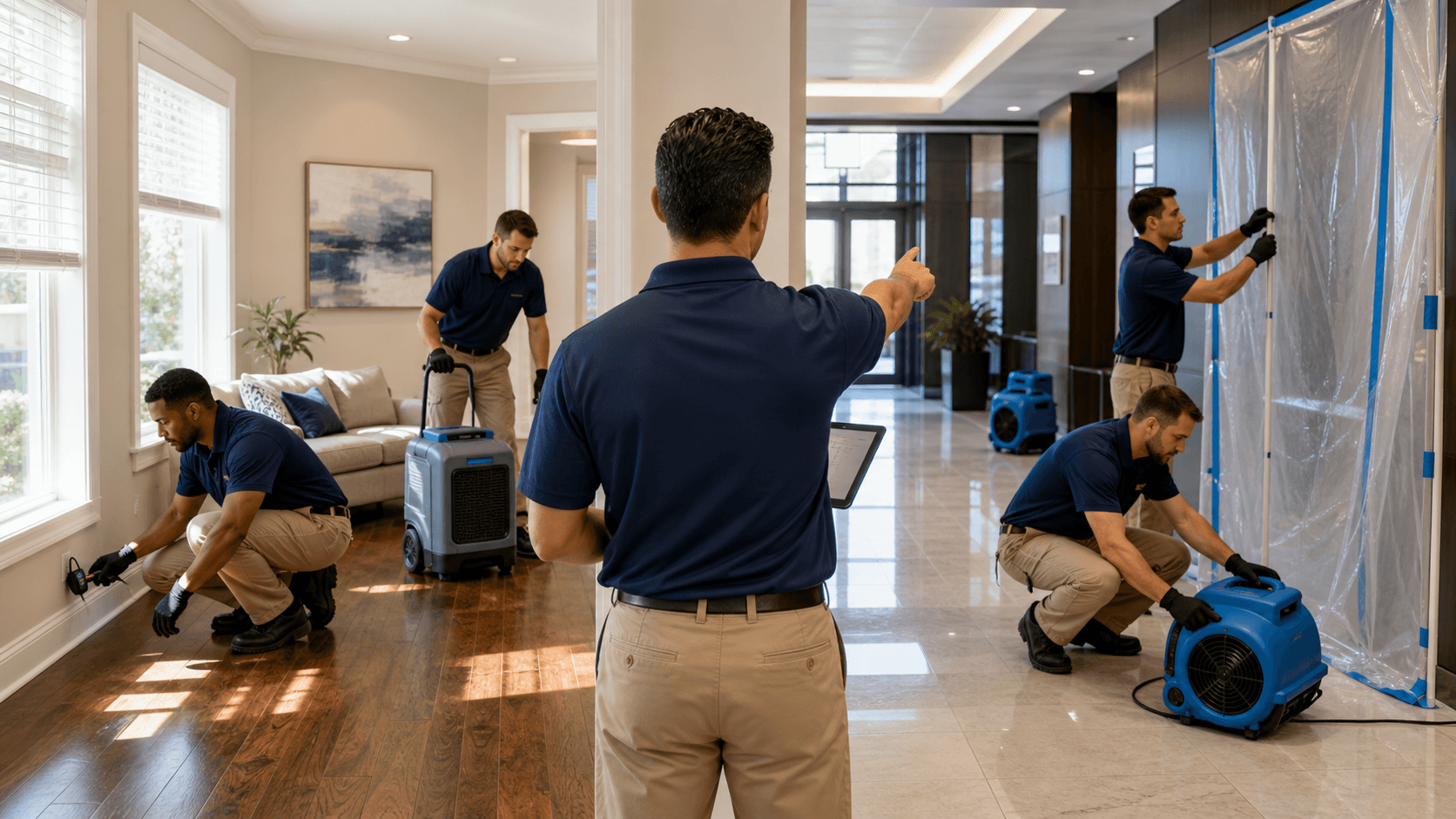
- Extra containment to keep dirty water from spreading
- More detailed disinfection
- Removal of some porous materials that cannot be safely cleaned
Drying, Dehumidification, and Mold Prevention
After large amounts of water are removed, the focus shifts to what you cannot see: trapped moisture inside walls, floors, and cavities. Our IICRC-certified technicians set up drying equipment such as:
- High-velocity air movers to push dry air across wet surfaces
- Dehumidifiers to pull water out of the air
- Specialty drying mats or wall systems when needed
We do not just set the machines and walk away. Each day, we return to:
- Take moisture readings in walls, floors, and structural framing
- Check indoor humidity and temperature
- Move or add equipment where readings are still high
- Record everything so there is a clear drying history
Mold likes warm, damp, still air, which Houston has plenty of, especially in late spring and summer. Same-day water damage cleanup in Houston lowers mold risk by:
- Getting water out fast instead of letting it sit overnight
- Keeping air moving in wet rooms
- Using HEPA air filtration in some cases
- Applying antimicrobial products on some affected surfaces
During the next two to five days, you will likely notice steady noise from fans and dehumidifiers, cords, hoses, and equipment in some rooms, and humidity dropping as odors slowly fade. As drying progresses, materials will start to feel dry again to the touch, and we will let you know when readings show that building materials are back in a safe range and ready for any needed repairs.
Repairs, Insurance Help, and Returning to Normal
Once the property is dry and stable, the focus turns to putting everything back together. Some materials can be cleaned and saved, while others may need removal so fresh, dry ones can be installed. That may include:
- Cutting out water-damaged drywall
- Removing baseboards and wet insulation
- Pulling up flooring that swelled or separated
- Cleaning or replacing trim and doors as needed
Controlled demolition is done in a neat way to keep dust and debris under control as much as possible. We plan work so you can still use safe parts of your home or business while repairs are going on when possible.
Insurance can feel confusing after a water loss, so we help by providing:
- Detailed estimates of the mitigation and repair work
- Moisture logs that show how wet things were and how they dried
- Photos and notes that document the damage and progress
We can explain our findings in simple terms so you have an easier time talking with your adjuster and understanding what may be covered and what may not.
When it is time to rebuild, common repair steps may include:
- Reinstalling or patching drywall
- Repainting affected walls and ceilings
- Replacing or repairing flooring
- Finishing trim and touch-ups
Because flooding and heavy rain events are a reality in our area, many owners also use this time to lower future risk. Helpful ideas can include:
- Checking appliance and toilet supply lines for wear
- Cleaning gutters and improving grading around the building
- Looking into backflow or sump systems where they make sense
- Doing seasonal walk-throughs before spring and summer storms
By moving fast on day one and following a clear plan in the days after, same-day water damage cleanup in Houston helps turn a stressful surprise into a problem that gets handled step by step, with less loss and a smoother path back to normal life.
Protect Your Home With Fast, Reliable Water Damage Cleanup Today
If water has entered your home, every minute counts, and our team at Houston Water Damage Restoration is ready to act quickly. We provide same-day water damage cleanup in Houston to help limit structural damage, prevent mold, and restore your space safely. Call us now so we can assess the situation, start the cleanup process, and help you get your home back to normal as soon as possible.