Stop Mold Before It Starts After Houston Water Damage
Mold does not wait long after water hits your home. In Houston's hot, humid air, mold can start to grow very fast after even a small leak or overflow. The first one to two days after water damage are when you have the best chance to keep it from spreading.
This matters for more than just looks or smell. Mold can bother kids, older adults, and anyone with allergies or asthma. It can also weaken walls, floors, and ceilings if it is allowed to grow inside building materials. In this guide, we will share simple, Houston-focused steps to help slow mold growth after water damage, and explain when it is time to bring in professional help from a trained restoration team.
Why Houston Homes Are So Vulnerable to Mold Growth
Houston is warm and humid for most of the year, and that humid air is what mold loves. When water gets into a home and materials stay damp, the outdoor humidity makes it even harder for things to dry on their own. Spring showers, stormy weather, and long stretches of damp air all add up to a higher risk of mold growth after water damage.
Water can get into Houston homes in many different ways, such as:
- Roof leaks during heavy thunderstorms
- Burst or leaking pipes inside walls or under sinks
- AC or HVAC condensate line leaks
- Washing machine, dishwasher, or water heater failures
- Street or bayou flooding that seeps into floors and walls
Many local homes also use materials that soak up and hold water. Drywall, insulation, carpet, padding, and wood flooring all act like sponges. Water can slip behind baseboards or under floors and stay hidden. That hidden moisture gives mold a dark, quiet place to grow where you cannot see it until there is a smell, stain, or soft spot.
First 24 Hours: Essential Steps to Prevent Mold
When water damage happens, the clock starts right away. Mold can begin to grow within the first one to two days, so fast action is important for mold prevention after water damage in Houston. The goal is to reduce moisture and keep it from soaking deeper into building materials.
First, think about safety and control of the area:
- If water is near outlets or electrical cords, turn off power to that area if you can safely reach the breaker
- Keep kids, pets, and anyone with breathing problems out of the affected rooms
- Do not step in water that may be from sewage or outdoor flooding
Next, try to slow down the damage while you arrange for help from a professional restoration company:
- Stop the source of water if possible, such as closing the main water valve or turning off a leaking appliance
- If it is safe, gently remove small pools of clean water from hard surfaces
- Move furniture, rugs, and personal items to a dry part of the home so they do not keep soaking up moisture
- Open interior doors and closets in the area to help air move through the space
Even with these efforts, deep drying and mold prevention often need more than what most homeowners have on hand. That is where 24/7 restoration services come in.
Drying Your Home the Right Way in Houston's Humidity
Houston's air is usually already heavy with moisture, so simply opening windows and hoping things dry is rarely enough. Surface drying might make a room feel better, but deep inside walls and floors, materials can stay damp. That is where mold can start to take hold.
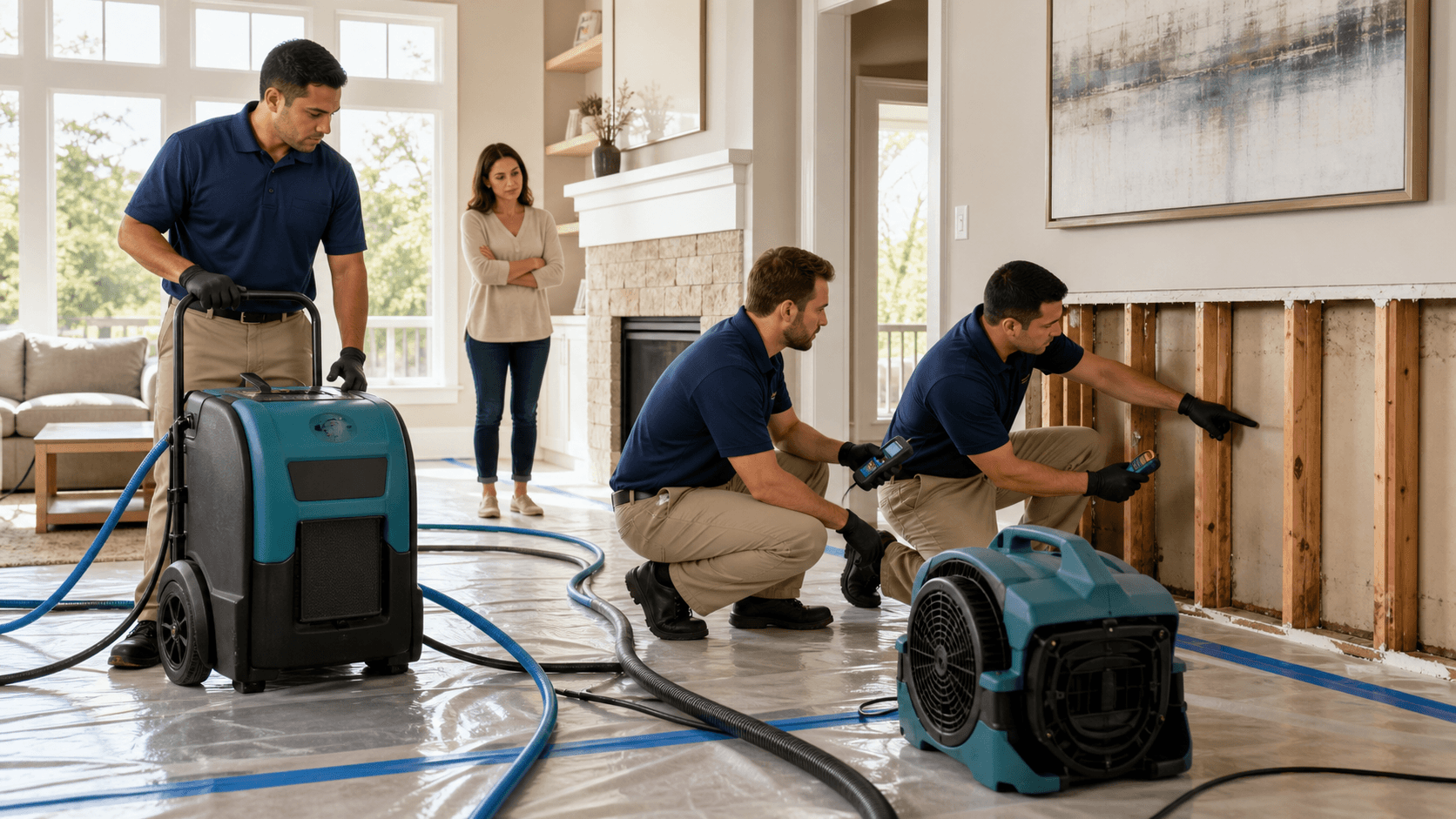
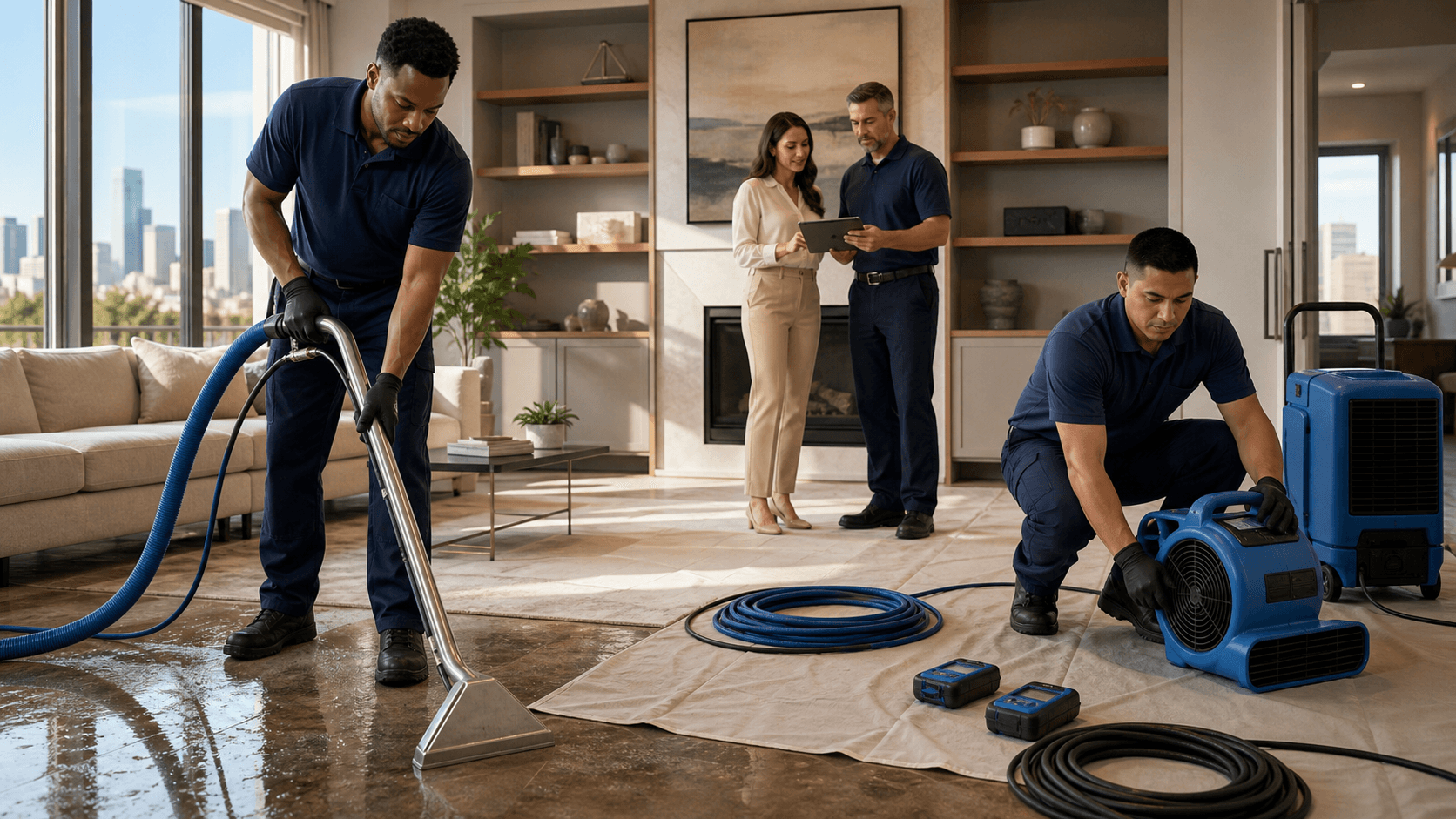
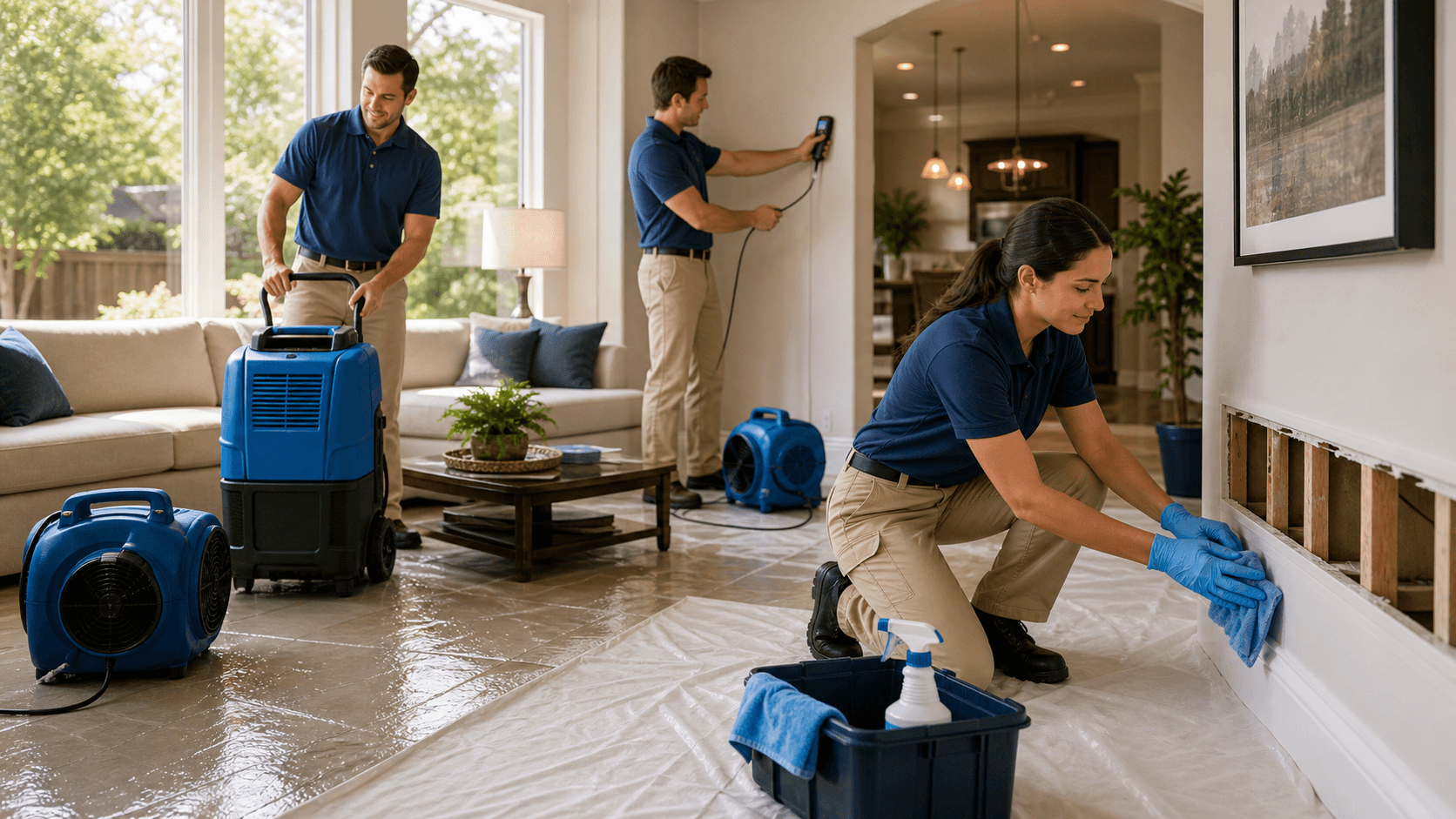
Professional restoration teams use equipment designed for this kind of work, such as:
- High-powered air movers to keep air moving across wet surfaces
- Dehumidifiers to pull moisture out of the air and materials
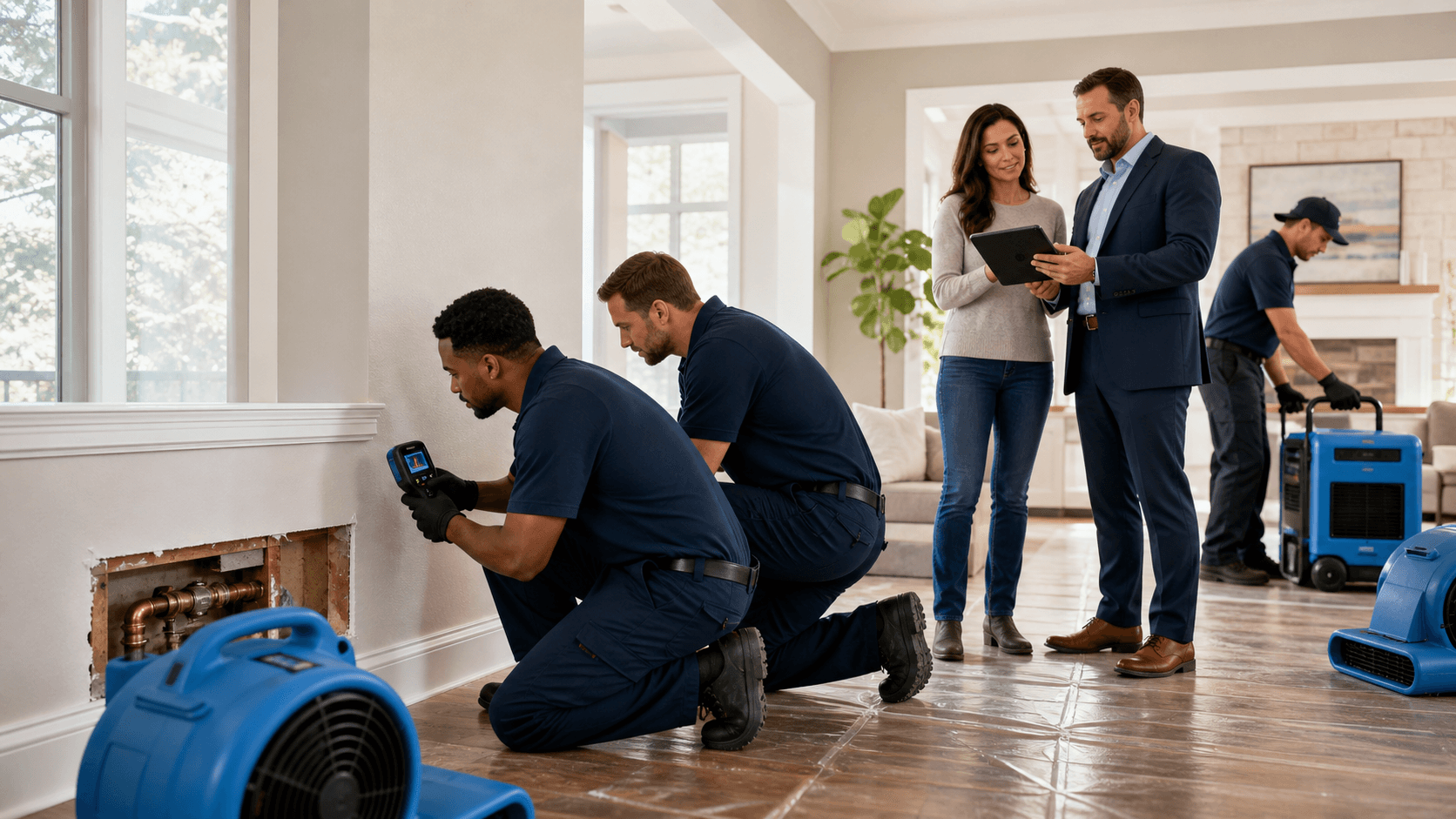
- Moisture meters to check inside walls, floors, and ceilings
While you wait for help, you can support the drying process with some basic steps:
- Run your AC to help lower indoor humidity if it is safe to do so
- Use fans to move air across wet surfaces, but avoid blowing air directly at any visible mold
- Ventilate the space carefully, and only open windows if the outdoor air feels less humid than inside
IICRC-certified technicians are trained to check for hidden moisture in places that homeowners often miss, such as behind baseboards, under vinyl or wood flooring, inside wall cavities, and inside cabinets. They follow a methodical process to confirm that materials are truly dry, not just dry to the touch, which lowers the risk of mold growth later.
When DIY Is Risky: Signs You Need Professional Help
Some small spills on hard surfaces can be handled quickly at home, but many water damage situations are too risky for DIY cleanup. Mold can be sneaky, and what you see on the surface is often only part of the problem.
You should consider professional help when you notice:
- A musty or earthy odor that does not go away
- Spots, streaks, or patches of discoloration on walls, ceilings, or baseboards
- Floors that feel soft, warped, or uneven
- Peeling, bubbling, or cracking paint or wallpaper
- Coughing, headaches, or congestion that seem worse while at home
There are also situations where professional intervention is especially important, such as:
- Sewage backups or toilet overflows with solids in the water
- Storm water from streets, ditches, or bayous getting inside
- Water that has soaked into walls, insulation, ceilings, or multiple rooms
- Any flooding that sits for more than a short time before cleanup starts
A trained team can set up containment to keep mold spores from spreading to clean areas. They can use HEPA filtration and appropriate cleaning methods, apply antimicrobial treatments where needed, and document the drying process, which can be helpful when working with insurance.
Long-Term Strategies to Keep Mold Out of Your Houston Home
Good habits before and after water events can lower the chance of mold taking hold. While no home can be completely mold-proof, regular care can make a big difference.
Some helpful preventive maintenance steps include:
- Check your roof for missing or damaged shingles, especially after strong storms
- Keep gutters and downspouts clear so water drains away from your foundation
- Seal around windows and doors to reduce leaks during heavy rain
- Look under sinks and around tubs and showers for drips or soft spots
Indoor humidity control is also important in Houston:
- Try to keep indoor humidity on the lower side, using AC and dehumidifiers as needed
- Run bathroom and kitchen exhaust fans while cooking or showering
- Address any condensation you see on windows, vents, or ducts
- Have your AC system serviced regularly so it can remove moisture as it runs
It also helps to have a simple home emergency plan. Know where your main water shutoff is located. Keep important phone numbers handy, including a trusted restoration company that offers water, mold, fire, smoke, and sewage damage services. After a major storm or heavy rain event, a quick walk-through of your home to look for leaks, stains, or damp spots can help you catch small problems before they turn into larger mold issues.
Protect Your Houston Home with Proactive Mold Defense
Fast action, correct drying, and steady maintenance all work together to prevent mold after water damage in Houston's humid climate. When we respond quickly, control moisture, and pay attention to early warning signs, we give mold less chance to grow and spread.
At Houston Water Damage Restoration, we live and work in this area, so we understand how local weather and housing types affect water and mold problems. By staying alert before and after storm seasons, checking for leaks, and taking water damage seriously right away, we can help keep our homes safer, stronger, and healthier for the people who live in them.
Protect Your Houston Home From Future Mold Problems
If your property has recently suffered water damage, now is the time to take proactive steps to keep mold from coming back. At Houston Water Damage Restoration, we use targeted strategies and professional-grade equipment to safeguard your home and your indoor air quality. Learn more about how our experts handle mold prevention after water damage in Houston and schedule service before small moisture issues turn into costly repairs. Let us help you restore your space safely and confidently.