Keep Your Doors Open When Houston Floodwaters Rise
Floodwater can shut down a business fast. One heavy spring thunderstorm hangs over Houston, the bayous spill, and before long water is pushing under doors and soaking floors. Work stops, customers are turned away, and everyone is scrambling.
The real cost is not just the water on the floor. It is lost revenue, damaged stock, ruined equipment, and customers who may not come back. The longer your space is closed, the harder it is to recover. Quick, professional commercial water damage restoration in Houston can be the difference between a short pause and a long shutdown.
We know how fast things move when storms hit here, and how quickly a small leak can turn into a serious problem. In this article, we will walk through how to plan ahead, what to do when water first gets in, how the right restoration team keeps you running, and how to cut your future downtime when the next storm comes.
Why Houston Businesses Are So Vulnerable to Floods
Houston has its own flood personality. In spring, storm systems pull in thick Gulf moisture, and slow-moving cells dump heavy rain in a short time. Bayous swell, ditches fill, and low spots in parking lots turn into shallow ponds that push water toward your doors.
Several local factors make commercial buildings easy targets for flooding, such as:
- Flat ground that does not drain quickly
- Clay-heavy soil that sheds water instead of soaking it up
- Overloaded storm drains and bayous during large storms
- Huge paved lots around shopping centers and warehouses that force water to run off fast
Inside and around your building, weak points are common. These often include ground-level entrances, worn door seals, roll-up doors at loading docks, low stairwells, aging roofs, and mechanical or storage rooms set just a bit too low. Many businesses also sit on slab foundations with poor drainage at the edges, so water seeps in where walls meet concrete.
Even if your property is not on a flood map, you can still get water damage. Backed-up drains in the street, runoff from a higher property next door, a broken sprinkler head, or a burst supply line can all flood a space. When these risks are not found and fixed ahead of time, cleanup takes longer, more materials need to be removed, and downtime grows quickly.
Pre-Flood Planning That Keeps Your Business Running
Strong planning before storm season gives you options when floodwater shows up. A simple walk-through can reveal a lot. Look at how water might travel across your lot and where it can enter. Check roof surfaces and drains, gutters, and downspouts. Note any important equipment or inventory stored right on the floor.
Helpful planning steps include:
- Walk the whole property and note low points, loading docks, and door thresholds
- Check roofs, gutters, and scuppers for clogs or damage
- Mark any electrical panels, servers, or machinery that sit near the floor
- Look for cracks and gaps in walls, around pipes, and at conduit openings
Flood hardening does not have to be complex. Even small changes help, like upgrading sump pumps and backflow preventers, adding French drains in known trouble spots, sealing wall penetrations, and lifting stock off the floor onto racks or pallets. Raising key systems, such as electrical panels and servers, can prevent both water damage and safety hazards.
Your business continuity plan is just as important as the building itself. Decide:
- Which tasks must stay active no matter what
- What can move off-site or be done remotely
- How you will handle phones, payments, and customer support if your main space is down
Give staff a clear playbook for flood warnings. Assign roles for shutting down equipment, moving key items to higher levels, placing sandbags, and locking up. Keep updated contact details for your commercial water damage restoration in Houston, your insurance agent, plumber, and electrician in one easy-to-find file, both printed and saved online.
What to Do in the First Hour After Water Intrusion
The first hour with water in your building is the most stressful one. Having a simple checklist makes it less chaotic. Safety should always come first. Only cut power if you can reach the panel without walking through standing water. Watch for signs of structural stress, fallen ceiling tiles, or bulging walls. Treat floodwater from outside or drains as contaminated and avoid skin contact as much as possible.
Right after you spot water, start documenting and sharing information. Take photos and videos from several angles. Note the time, the known or suspected source, and which rooms or areas are affected. Let building management, your insurer, and your restoration contractor know as soon as you can.
If it is safe, your team can help limit spread by:
- Closing building supply valves if you suspect a plumbing leak
- Blocking off wet areas so traffic does not push water farther
- Moving electronics, paper records, and stock off damp floors and surfaces
- Using trash cans or plastic sheeting to catch active drips from overhead
Water damage keeps getting worse by the hour. Sheetrock wicks moisture upward from the floor. Subfloors and wood framing soak up water and can start to warp. Within a day or two, mold and musty odors often begin. Fast response from a commercial water damage restoration team gives you the best chance to dry materials in place and avoid heavier demolition later.
How Professional Restoration Slashes Business Downtime
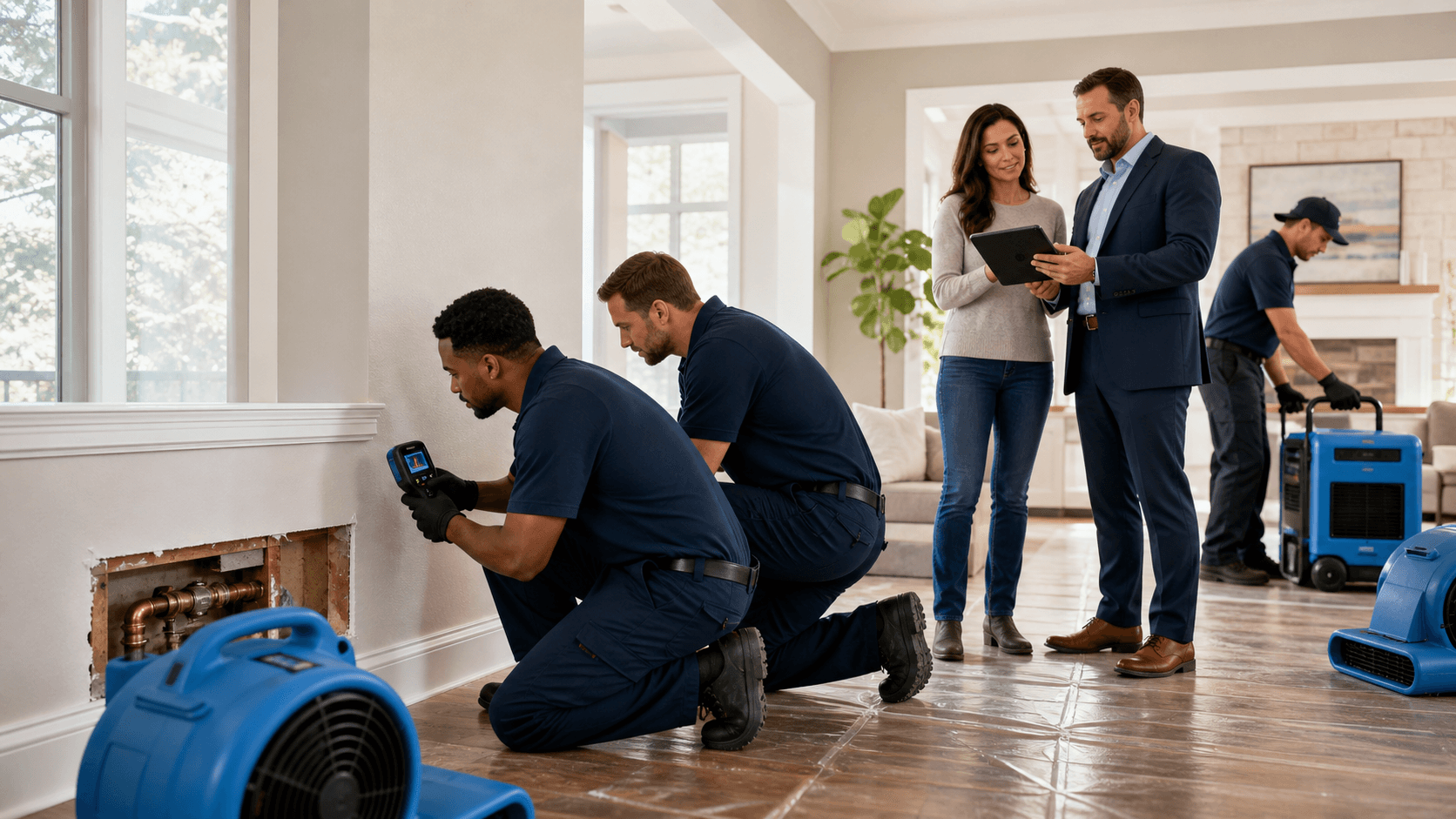
Professional restoration is not just about drying things out. It is about getting you back to business in a safe and smart way. IICRC-certified technicians know how to identify the type of water that entered your space, check for hidden moisture in walls and floors, and create a clear plan that protects both people and property.
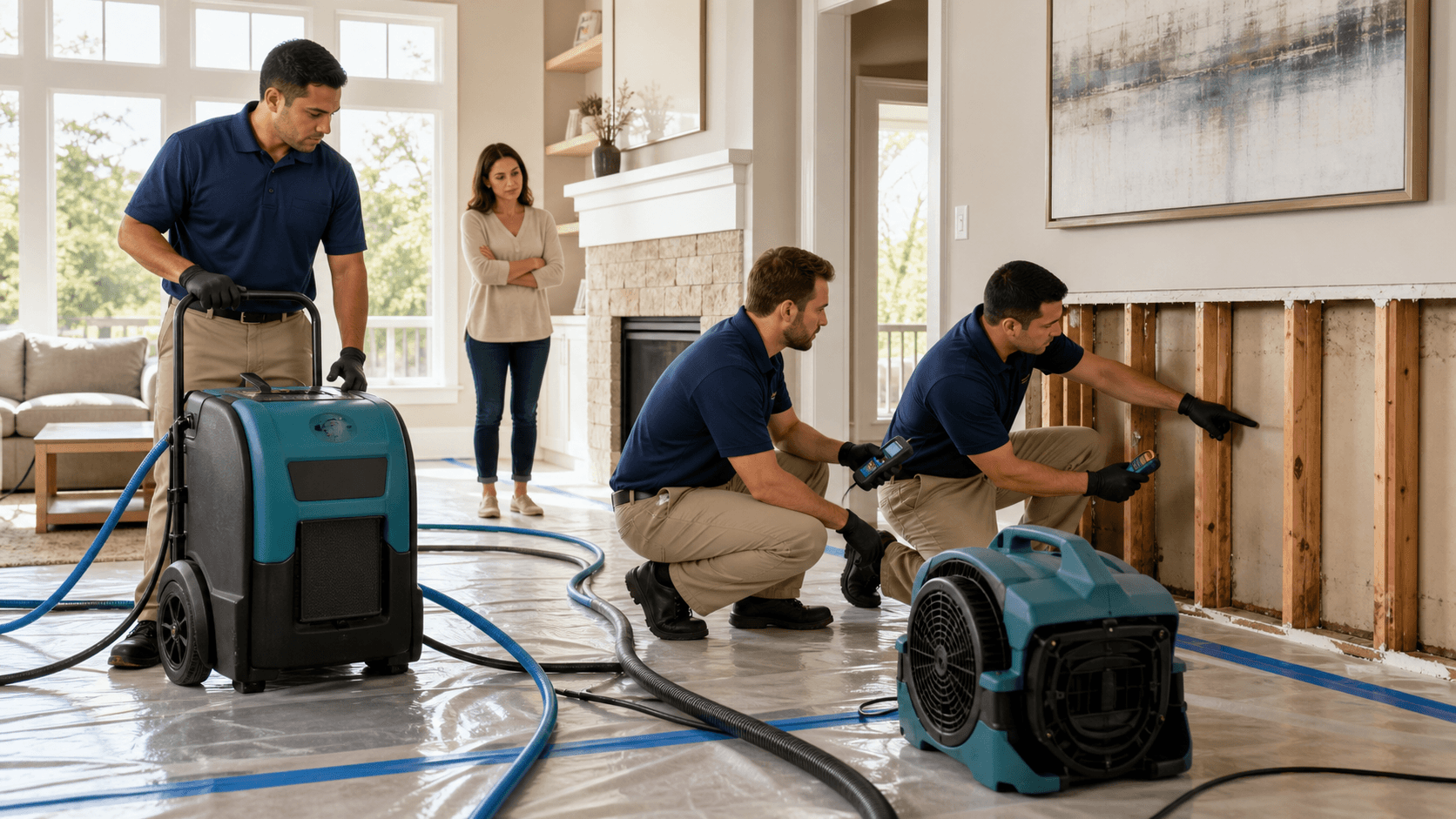
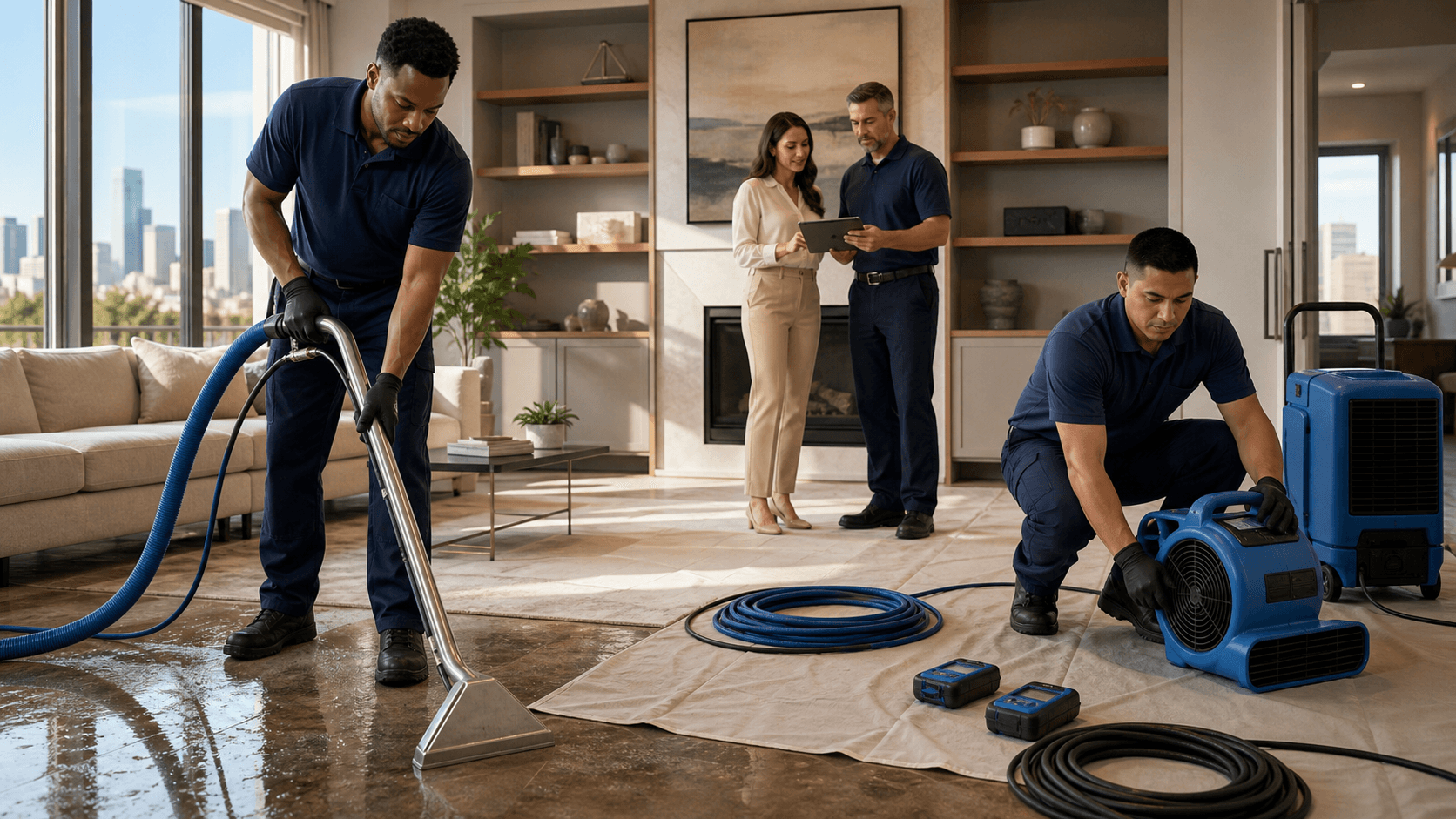
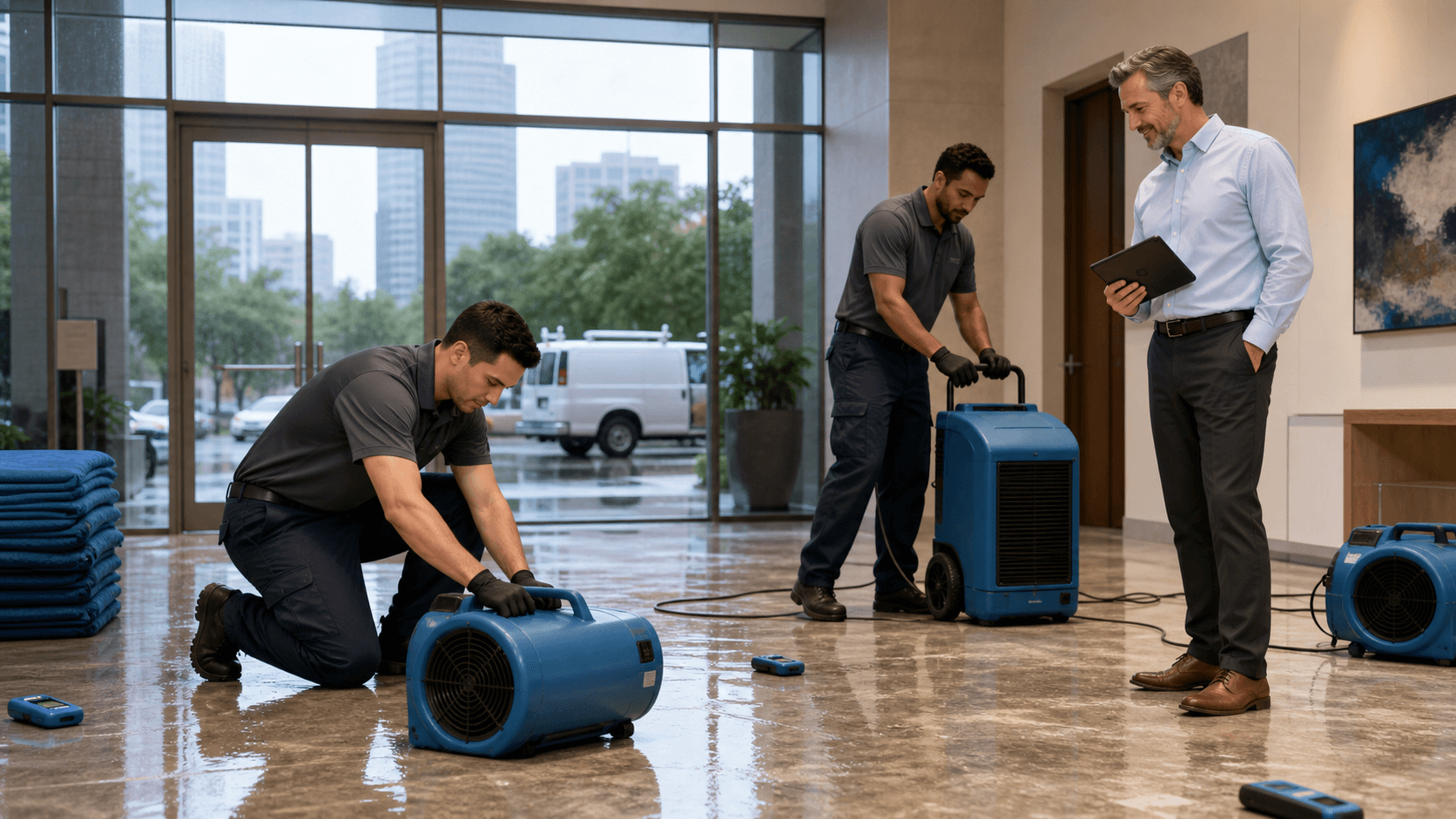
A commercial-focused team brings industrial-grade tools, such as powerful extractors, truck-mounted or portable pumps, high-capacity dehumidifiers, and air movers. They remove unsalvageable materials, then build a drying setup that pulls moisture out of the building as quickly as possible. When needed, they can set up negative air containment so wet areas are isolated and cleaner parts of the building can stay in use.
Because commercial work is different from homes, the plan is designed around your operations. A local Houston team understands the layout of offices, retail spaces, restaurants, warehouses, and multi-tenant buildings. They can:
- Phase work to reopen non-impacted areas first
- Set up safe paths for staff and, when possible, customers
- Coordinate with property managers and other vendors on timing
Mold and odor control is a big part of keeping you from closing again later. Antimicrobial treatments, careful humidity monitoring, and complete structural drying help prevent hidden mold growth behind walls or under flooring. Detailed reports, lists of damaged items, and moisture logs also simplify your insurance claim so you can decide what to repair or replace with better clarity.
Long-Term Strategies to Reduce Future Flood Disruptions
Once you have been through one water event, it makes sense to plan for the next one. Long-term building improvements can lower your risk and shorten future downtime. Some options to consider are flood barriers or flood doors at key entrances, better roof systems and drainage, water leak detection sensors, and water-resistant finishes in areas that tend to get wet.
Operational resilience is just as important as building upgrades. A strong disaster recovery and business continuity plan might include:
- Remote work setups for key staff
- Off-site or cloud backups for important data
- Alternate storage for critical inventory and records
- Backup options for phones, internet, and payment processing
Regular maintenance helps keep surprises smaller. Seasonal roof checks, gutter and drain cleanouts before heavy rain periods, and routine testing of sump pumps and backup power systems make a big difference. It is also smart to review emergency steps with your team at least once a year so everyone knows what to do.
Take time to study your insurance coverage so it fits your real risk. Know what is included for water and flood, what limits apply, and how business interruption coverage works for you. Forming a long-term relationship with a trusted local provider of commercial water damage restoration in Houston can also help. Pre-loss site walks and agreed response plans often lead to faster action and less confusion during the next big storm.
Work with a Houston Team That Puts Your Business First
Floodwater does not have to mean weeks of lost revenue. With smart planning, a clear emergency playbook, and fast professional support, most businesses can turn a messy event into a temporary slowdown instead of a long shutdown.
At Houston Water Damage Restoration, we are local, we understand how Houston floods, and we work every day with offices, retail spaces, restaurants, warehouses, and multi-tenant commercial properties. Our IICRC-certified crews focus on safety, clear communication, and getting you back to work as quickly as the situation allows, day or night, every day of the week.
Get Started With Your Project Today
If water has disrupted your business, Houston Water Damage Restoration is ready to respond quickly and get your property operational again. Our experienced team provides thorough assessments, clear communication, and efficient solutions tailored to your building and industry. Learn how our commercial water damage restoration in Houston can help you reduce downtime and prevent lingering issues. Reach out today so we can start restoring safety, comfort, and normal operations for your facility.